Electrical Safety · Panels & Breakers
Why Does My Circuit Breaker Keep Tripping? Warning Signs Miami Homeowners Should Never Ignore
EVONEX Group LLC ·
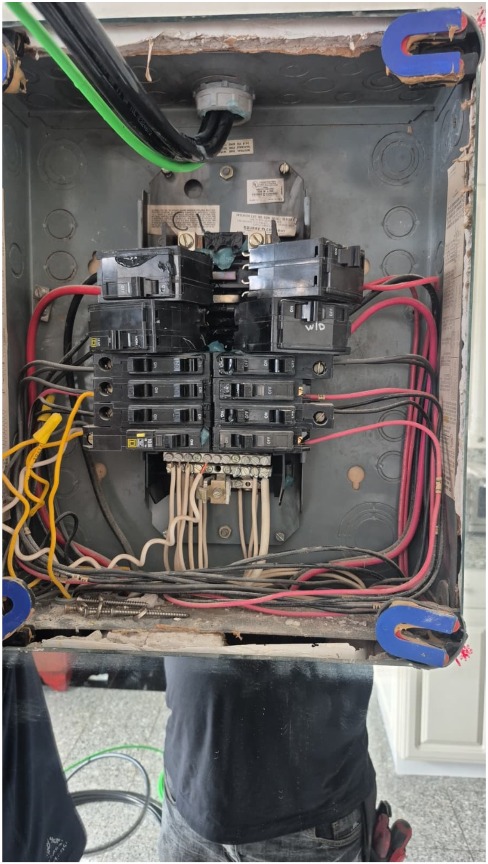
A circuit breaker that trips once after a storm or while several appliances run together may simply be doing its job. A breaker that trips again and again is different. It is a protective device telling you that something on the circuit, or in the panel itself, needs attention. For Miami-Dade homeowners, condo residents and small property owners, the practical question is not how to keep the breaker on, but why it keeps switching off and what can be done safely while a licensed electrician evaluates the cause.
What a breaker is designed to do
A breaker interrupts current when it detects a condition outside its rating, such as sustained excess current or, for certain breaker types, a ground fault or arc fault. That interruption protects the wiring from overheating. In other words, the trip is usually a symptom, not the problem. Resetting it restores power, but it does not remove whatever caused the trip.
Not every trip means danger, and not every trip means fire. Still, repeated trips deserve a professional explanation because the possible causes range from a simple overloaded circuit to damaged equipment that can heat up over time.
Common causes of repeated tripping
Overload: too many devices on one circuit, such as a space heater, microwave and hair dryer sharing the same kitchen or bathroom circuit. The breaker often trips after a few minutes of combined use.
Short circuit: a hot conductor contacts a neutral or another conductor, often due to damaged insulation, a failing device or a defect inside an appliance. These trips tend to be immediate.
Ground fault: current finds an unintended path to ground, frequently where moisture is present—outdoor outlets, kitchens, bathrooms, laundry areas and pool equipment. GFCI devices and GFCI breakers are designed to react to these conditions.
Appliance defects: a refrigerator, air handler, washer or tool with an internal fault can trip a healthy circuit. If the trip happens only when one appliance runs, that pattern is useful information for the electrician.
Loose or deteriorated connections: a loose terminal at an outlet, switch, splice or breaker can create heat and intermittent behavior. Humidity and age can contribute to corrosion.
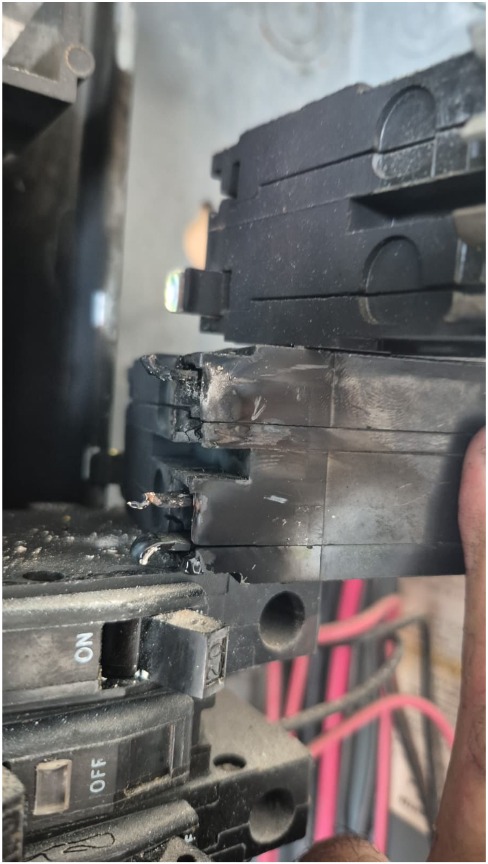
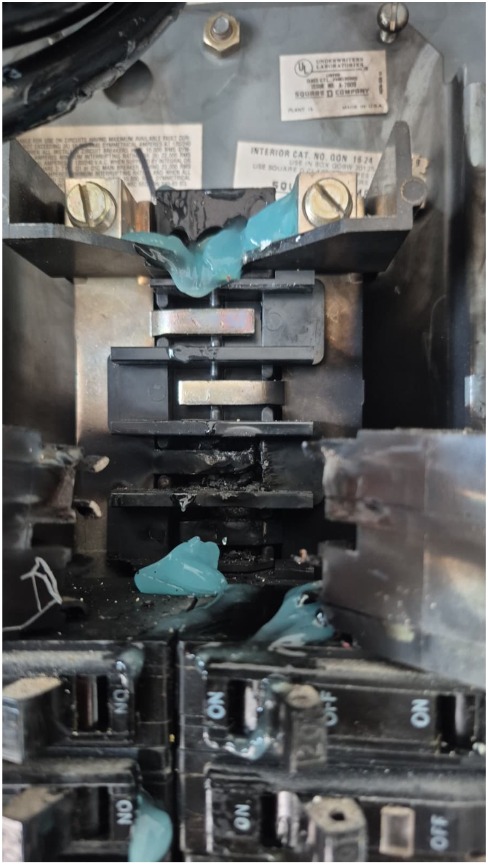
Aging or damaged panel components: worn breakers, damaged bus bars, heat-discolored parts or water intrusion inside the panel can cause unreliable operation and require evaluation.
Real panel and breaker conditions
Warning signs you should never ignore
Some symptoms move a tripping breaker from inconvenient to potentially hazardous: a burning or hot plastic smell near the panel, an outlet or a switch; scorch marks or discoloration; unusual heat noticed without touching equipment; buzzing or crackling sounds; flickering that coincides with trips; and a breaker that will not stay reset at all. Do not touch equipment to check its temperature.
If you see smoke, sparks or flames, smell burning, or notice intense heat, leave the area, keep others away and call 911 when appropriate. Do not try to investigate the panel yourself.
What not to do
Do not keep resetting a breaker that trips repeatedly. Each reset can return power to a fault that is still present.
Never replace a breaker with a higher-amperage breaker to stop the trips. The breaker is sized to protect the wire; a larger breaker can let the wire overheat before the device reacts.
Never remove the panel cover, touch breakers with wet hands, or contact exposed or energized parts. Do not tape a breaker in the ON position, bypass a GFCI or attempt panel repairs yourself.
Safe observations that help the electrician
Without opening anything, you can collect useful details: which breaker trips, how often, what was running at the time, whether the trip is instant or delayed, and whether it happens after rain or when a specific appliance starts. Unplug nonessential devices only if their plugs and outlets are accessible, dry and show no heat, damage or other warning signs. Otherwise leave them alone and keep away.
Photos of the closed panel label, the breaker position and any visible discoloration taken from a safe distance can also help a professional prepare. Keep notes simple and factual.
Electrical troubleshooting guide for Miami →What a licensed electrician evaluates
A qualified evaluation may include load review for the circuit, inspection of devices and connections, testing for shorts and ground faults, checking breaker and panel condition, and reviewing whether the protection type matches the location. The findings determine whether the right step is redistributing loads, repairing a device, replacing a breaker, repairing wiring or evaluating the panel further.
When damage is visible at the bus or breaker connection, the recommendation may involve more than swapping one breaker. The electrician should explain the options and the reasoning before work proceeds.
A photograph cannot establish whether a panel is energized, whether damage remains active, or what originally caused it. Discoloration may warrant closer professional inspection, but it is not enough to identify the correct repair remotely. A full-panel view provides context; a close-up may show a damaged area. Neither replaces testing. Do not remove covers to obtain more detailed photos.
Miami-Dade conditions worth considering
Humidity, heavy rain, outdoor equipment, older homes and renovations that added new loads are common local factors behind nuisance and recurring trips. Coastal exposure, where it applies, can accelerate corrosion on exterior equipment. These factors do not mean a home is unsafe; they are reasons to have repeated trips properly diagnosed rather than ignored.
If you are planning new appliances, an EV charger or a remodel, ask about circuit capacity before adding load to a panel that already trips.
For a condominium, tell the property manager whether the affected circuit serves your unit or a shared area. Access and authorization may differ. Owners of rented homes should notify the responsible property contact promptly and document the symptoms without attempting repairs. If someone depends on powered medical equipment, follow their established backup and emergency plan; do not repeatedly reset a faulty circuit to keep that equipment running.
Older Miami Homes and Electrical Panel Capacity
Many Miami-Dade homes were built decades ago, and some still operate with the electrical panels installed at that time. Over the years, central air conditioning, additional appliances and other electrical loads were often added without a full panel upgrade, so an older panel may be serving more demand than it was originally sized for.
That does not automatically mean the home is unsafe. Panels of that era can still function when they are in good condition and their loads are managed. However, if a home with an older panel experiences repeated breaker trips, that combination of panel age, added loads and Miami-Dade's climate conditions should be evaluated by a licensed electrician, who can determine whether the panel is adequate or whether an upgrade should be considered.
Panel evaluation and upgrades in Miami →Electrical panel repair in Miami: older homes and service capacity →Getting help from EVONEX
EVONEX coordinates electrical troubleshooting, breaker and panel evaluation for homes and properties in Miami-Dade, with Broward as a secondary area. Share which breaker trips, what you have observed and access details through the existing service request form, or call directly. Scope and scheduling are confirmed for each property.
Breaker Keeps Tripping? Call EVONEX Electrical Services (786) 451-7011
Same-day appointments subject to availability