Electrical Troubleshooting in Miami: What Property Owners Should Check Before Calling an Electrician
By EVONEX Group LLC ·
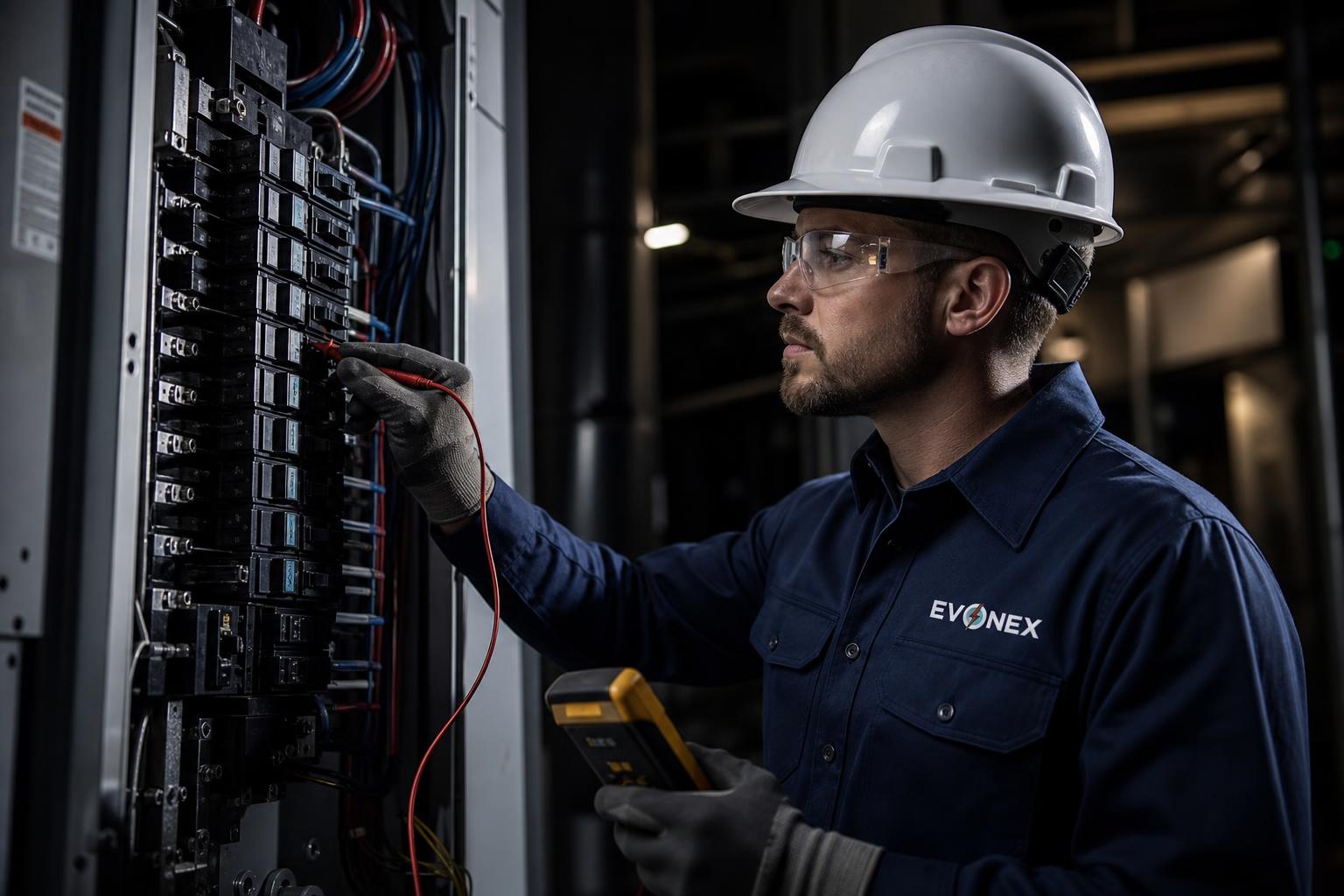
A breaker that trips every afternoon, an outlet that suddenly stops working, lights that flicker when the air conditioning starts: electrical problems rarely announce their cause. For homes, condos, HOAs and commercial properties in Miami-Dade, the most useful thing an owner or manager can do before calling an electrician is observe carefully and write down what is happening. This guide explains which symptoms deserve a proper diagnosis, what information to gather, and where simple observation ends and professional electrical work begins.
Why troubleshooting comes before repair
Replacing a breaker, an outlet or a fixture can make a symptom disappear for a while without fixing the reason it appeared. A breaker that trips may be doing exactly what it was designed to do: protecting a circuit that is overloaded or has a fault somewhere along its path. Treating the breaker as the problem can hide the real issue.
Good troubleshooting traces the symptom back to its source: the device, the wiring, the connection, the load on the circuit or the panel feeding it. Only then does it make sense to talk about repair options and scope.
Recurring breaker trips
An occasional trip after plugging in a space heater or running several kitchen appliances at once can simply mean that circuit was asked to carry too much. A breaker that trips repeatedly, trips with little or no load, or will not reset is a different situation and deserves a closer look.
Before calling, note which breaker trips, how often, what was running at the time and whether the trip happens at a particular time of day. In Miami, many repeated trips line up with air conditioning cycles, pool equipment, water heaters or kitchen use, and that pattern is valuable information for whoever evaluates the circuit.
Dead outlets and partial power
When one outlet stops working, the cause may be a tripped GFCI device elsewhere on the same circuit, a tripped breaker, a worn receptacle or a loose connection. When several outlets or rooms lose power while the rest of the property still works, the issue may involve a shared circuit, a connection upstream, or in some cases the service or panel itself.
A safe first step is checking the panel for a tripped breaker and looking for GFCI outlets in bathrooms, kitchens, garages, laundry areas, balconies and exterior walls that may need to be reset. If power does not return, or returns and drops again, the circuit should be evaluated rather than repeatedly reset.
Flickering or dimming lights
A single flickering lamp may only be a loose bulb or a fixture at the end of its life. Flickering that affects several lights, happens when large equipment starts, or appears together with buzzing, dimming or a burning smell points to something that should be diagnosed, such as a loose connection, an overloaded circuit or a problem in the panel.
Lighting technology also matters. Some LED lamps and older dimmers are not compatible, and some fixtures converted to LED still carry aging ballasts or sockets. If the flicker is limited to lighting, our guide to LED lighting in Miami-Dade and Broward explains what to check in the fixtures and controls.
Related article: LED lighting for Miami-Dade & Broward properties →Warm switches, outlets or panel components
Dimmers and some devices can feel slightly warm during normal use. A switch plate, receptacle, breaker or panel cover that feels hot, is discolored, smells like burning plastic or makes crackling or buzzing sounds is not something to monitor over time. Stop using the affected device or circuit if it can be done safely and arrange a professional evaluation.
Heat at a device or panel often comes from a loose or deteriorated connection, an overloaded circuit or a component that is no longer suitable for the load. These conditions are not visible from the outside, which is why they call for proper testing instead of guessing.
GFCI outlets that keep tripping
GFCI protection is designed to cut power when it detects current leaking where it should not. A GFCI that trips occasionally during a storm or after a device gets wet may be doing its job. A GFCI that trips repeatedly, will not reset, or trips whenever a specific appliance runs deserves diagnosis.
Moisture is a common factor in Miami-Dade and Broward. Exterior receptacles, pool and patio areas, balconies and garages are exposed to rain and humidity, and covers or boxes that no longer seal well can let water in. The device, the circuit and what is plugged into it all need to be considered.
When a panel or circuit capacity evaluation may be needed
Many Miami properties now carry loads that did not exist when their electrical systems were designed: larger air conditioning systems, EV chargers, induction cooking, pool equipment, home offices and additional kitchen appliances. When breakers trip more often after new equipment is added, or when there is no space for new circuits, it may be time to evaluate the panel and available capacity.
A capacity evaluation looks at the existing service, the panel, breaker space and the loads on the property before anything is recommended. Our panel upgrade page in Miami explains how that evaluation fits into panel and breaker work.
Electrical panel repair and upgrades in Miami →What to observe and write down before calling
Clear information helps an electrician arrive with the right expectations and makes the visit more productive. Useful details include: the property address and type; which rooms, outlets, lights or equipment are affected; when the problem started; whether it is constant or intermittent; what was running when it happened; and whether any breaker or GFCI was reset.
Photos help too, taken from a safe distance: the panel directory, the affected device, any discoloration and the label of the equipment involved. Note any recent work, storms, water intrusion or new appliances. None of this requires opening a panel or removing a cover.
What owners can check, and what should be left to a professional
Owners and managers can safely look for tripped breakers, reset a breaker once, reset GFCI devices, unplug equipment to see whether a symptom changes, and note patterns. These steps are observation, not repair.
Removing panel covers, opening outlet or switch boxes, replacing breakers, testing live circuits or modifying wiring should be handled by a qualified electrical professional. If there is smoke, burning smell, sparking, visible damage or water near electrical equipment, keep people away from the area and contact the appropriate emergency service or utility first.
Condos, HOAs and property managers
In condominiums and associations, the first question is often who is responsible. A problem inside a unit may belong to the unit owner, while feeders, meter rooms, common-area lighting and shared equipment are usually the association's responsibility, depending on the governing documents. Clarifying that early avoids delays.
Access also needs coordination: electrical rooms, meter banks, roofs and parking areas may require building staff, keys or scheduled time. Property managers benefit from clear documentation of what was found and what was done, so boards and owners can make decisions. Our property manager service page describes how EVONEX coordinates with building teams.
Service for property managers →Commercial properties
In offices, retail spaces and mixed-use buildings, electrical problems affect tenants and operations. Intermittent outages, tripping on specific circuits, lighting failures and equipment that loses power need to be diagnosed with the property's hours and tenants in mind.
For commercial sites, it helps to identify the affected suite or area, the equipment involved and the best window for access, and to share any existing panel schedules or prior service records.
How EVONEX approaches electrical troubleshooting in Miami
EVONEX Electrical serves homes, condos, HOAs and commercial properties in Miami-Dade and Broward. A troubleshooting visit starts with your description of the problem, then focuses on tracing the symptom to its source before discussing repair options and scope.
To request service, call 786-451-7011 or use the contact page to share the property, the electrical concern and the best time to coordinate access. You can also review our Miami electrical services and the full EVONEX Electrical overview.
Electrical services in Miami →Frequently asked questions
Is it safe to keep resetting a breaker that trips?
Resetting a breaker once after reducing the load is a reasonable check. If it trips again, trips with little load or will not reset, stop resetting it and have the circuit evaluated, because the breaker may be responding to an overload or fault.
Why does one outlet work and the one next to it doesn't?
Outlets on the same wall are not always on the same circuit. A dead outlet may be downstream of a tripped GFCI in another room, on a tripped breaker, or affected by a worn device or loose connection. Checking breakers and nearby GFCI outlets is a safe first step.
Should flickering lights be checked by an electrician?
A single flickering lamp may be a bulb or fixture issue. Flickering across several lights, flickering when large equipment starts, or flickering with buzzing or a burning smell should be diagnosed by an electrical professional.
In a condo, who handles an electrical problem?
It depends on where the problem is and on the association's documents. Issues inside a unit are often the owner's responsibility, while common-area and building systems are usually the association's. The property manager can help confirm responsibility and coordinate access.
What should I have ready when I call EVONEX?
The property address and type, what is affected, when it started, whether it is constant or intermittent, what was running at the time, whether anything was reset, and photos taken from a safe distance. Call 786-451-7011 to request service in Miami-Dade or Broward.
EVONEX Electrical
Miami-Dade + Broward
Electrical troubleshooting for homes, condos, HOAs and commercial properties in Miami-Dade + Broward. Call 786-451-7011.